Ecolint Campus des NationsMathematics
Mathematics · Educational Research

Why mathematics is hard — and what actually helps.

Mathematics is the school subject most adults openly admit to finding difficult. Decades of public debate (the so-called "Math Wars") have argued about whether students should drill procedures or build understanding first. We don't pick a side — we follow the evidence. The reading list below shapes how we teach.

Reading educational research carefully

Educational research is harder than it looks. Effect sizes are small, replication is patchy, you can't double-blind a classroom, and the same dataset usually supports several different stories depending on what you came in believing. The "Math Wars" are largely a long conversation between philosophical positions — traditionalists who emphasise procedural fluency and direct instruction, and reformers who emphasise conceptual understanding, problem-solving, and equity. Most of the actual research finds both matter, but advocates on each side reliably read the same studies as supporting their priors.

Take Jo Boaler — a Stanford professor, founder of YouCubed, prominent advocate of growth mindset, and one of the loudest voices for de-tracking and against timed maths tests. Her empirical claims are contested. The "Railside" study underpinning much of her advocacy was the subject of a sustained methodological critique by James Milgram and Wayne Bishop, who argued that the data, properly read, do not support her conclusions. Stanford reviewed the dispute and described it as "academic debate" rather than research misconduct, but the core empirical questions remain genuinely open.

Our position: be cautious about Boaler's strongest empirical claims, but do use her tasks. The rich, low-floor / high-ceiling problems on YouCubed are excellent classroom material — accessible to a struggling student, deep enough to challenge the strongest. Good problems and contested empirical claims can coexist; we take what works in the classroom and stay sceptical about the slogans.

This is how we read most research: provisionally, with attention to who funded it, who replicated it, and whether the effect size justifies the policy claim. We follow effect sizes, not slogans, and update when the evidence does.

Desirable difficulties, cognitive load, and retrieval practice — a tension we manage daily

The cognitive-science techniques teachers reach for most often — retrieval practice (testing yourself instead of re-reading), spaced practice (revisiting topics over weeks rather than cramming), and interleaving (mixing topics rather than blocking by topic) — sit under Robert Bjork's umbrella term "desirable difficulties." They make the immediate experience of practice harder, but they produce better retention weeks and months later. The catch: cognitive load theory (Sweller) says working memory is finite, so if we pile too much difficulty on at once, learning collapses. The practitioner's job is the sweet spot — productive struggle, not overwhelm.

Anxiety is the lever that closes that sweet spot fastest. An anxious student is already loading working memory with worry before any maths arrives — so a task that would be a desirable difficulty for a calm student becomes overload for an anxious one. That is why we treat managing classroom culture (where getting things wrong feels ordinary, not catastrophic) as a precondition for desirable difficulty to work — not as a competing priority. The two go together.

The recent meta-analyses are usefully nuanced. A 2025 mathematics-specific meta-analysis (Educational Psychology Review) finds spaced practice yields g ≈ 0.28 over massed practice — small-to-medium and consistent — and practice testing yields g ≈ 0.50 in lab settings, dropping to g ≈ 0.33 in classroom settings. Format matters: multiple-choice retrieval g ≈ 0.70, short-answer g ≈ 0.48. A 2024 STEM paper provocatively titled "is the glass half full or half empty?" makes the case that effect sizes in real classrooms are routinely smaller than the lab-derived headline figures imply. Carl Hendrick's 2025 essay "Making Retrieval Practice Actually Work" lays out the seven implementation conditions that separate effective retrieval practice from a quiz-bombing approximation — keeping stakes low to manage anxiety is high on his list, which is why we treat anxiety management and desirable difficulty as inseparable rather than competing. We use these techniques because the evidence supports them — but we don't expect them to produce a Bloom-style 2σ shift in a single term.

A caveat on cognitive load theory itself: measurement is subjective (post-task self-rating scales), and the classical separation of intrinsic, extraneous, and germane load is itself contested — some researchers argue these components can't be cleanly added, and the theory has been reformulated more than once in response. We use it as a practical frame for thinking about task design, not as an exact physics of working memory.

Books that shape our practice

Each of these informs a real choice we make in the classroom — group work, retrieval, modelling, mindset.

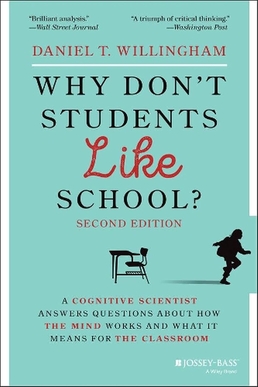
Why Don't Students Like School?

Daniel T. Willingham

A cognitive scientist explains why thinking is hard, why working memory is the bottleneck, and why background knowledge matters more than "21st-century skills." Underpins how we sequence content.

Read more ↗

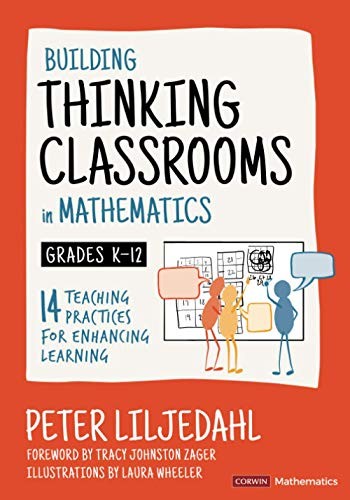
Building Thinking Classrooms in Mathematics

Peter Liljedahl

The basis for our visibly-random groups and vertical non-permanent surfaces (whiteboards). Fourteen practices, each backed by classroom research, that get students thinking instead of mimicking. Critique (Greg Ashman, "Filling the Pail"): the central definition of "thinking" as problem-solving is so narrow that it rules out anything a teacher demonstrates or explains, which sets up a false opposition with explicit instruction; the empirical base linking BTC practices to attainment gains is weaker than the book's confidence implies, and the headline ideas (group work, problem-first, whiteboards) are an old idea repackaged. We use what works — random groups and vertical whiteboards genuinely change classroom dynamics — but we don't accept the implicit critique of explicit instruction, which our own practice and the cognitive-science literature both support.

Read more ↗

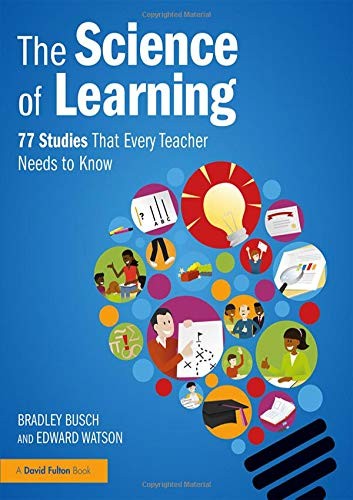
The Science of Learning: 99 Studies That Every Teacher Needs to Know

Bradley Busch & Edward Watson

A short summary of 99 high-quality studies on learning, motivation, and feedback — translated into classroom practice. Useful for parents who want to see the evidence behind decisions.

Read more ↗

Student Grouping Study — secondary maths (EEF, May 2026)

Education Endowment Foundation · UCL Institute of Education

A two-year study across 97 English secondary schools comparing setting and mixed-attainment grouping in Year 7 and Year 8 maths. Headline: high-attaining pupils made about two months' extra progress when grouped by attainment; lower-attaining pupils and pupils on free school meals progressed similarly in either model, but mixed-attainment grouping had moderate negative effects on the maths self-confidence of lower-attaining pupils. The strongest UK evidence to date on attainment grouping in lower secondary maths — directly informs how we group classes at MYP.

Read more ↗

Espresso — Attainment grouping in mathematics learning

Lucy Rycroft-Smith · Cambridge Mathematics

A one-page research summary on what setting and mixed-attainment grouping do — and don't do — for mathematics achievement, attitudes, and equity. Useful read alongside the EEF Student Grouping Study above; the two together give parents and teachers a clear picture of what the evidence does and doesn't say.

Read more ↗

TES — FSM maths students see similar progress in sets or mixed groups, EEF finds

Tes Magazine · journalist write-up of the EEF Student Grouping Study

The Times Educational Supplement's plain-English coverage of the same EEF study above. A quicker read than the full report — useful if you want the headline findings without the methodology section.

Read more ↗

Cross-age peer tutoring — meta-analysis (2025)

Educational Psychology Review · Springer

A 2025 meta-analysis of 32 studies on cross-age tutoring (older students tutoring younger ones). Overall effect on academic outcomes ≈ 0.34σ — small to moderate, but consistent. Crucially, the effect is positive for both parties: tutees gain ≈ 0.33σ, tutors gain ≈ 0.39σ — i.e. the act of teaching benefits the tutor at least as much as the tutee. This shapes how we frame our CAS peer tutoring at /beyond/get-involved.

Read more ↗

Making Retrieval Practice Actually Work — Seven Essential Principles for Teachers

Carl Hendrick · Substack (Feb 2025)

A practitioner's complement to the retrieval-practice meta-analyses. Hendrick argues the technique only delivers when seven implementation conditions are in place: allow enough forgetting between sessions, frame retrieval as a learning event (not assessment), pitch the difficulty right, space the practice, anchor it to the curriculum, teach the strategies explicitly, and keep stakes low to reduce anxiety. The last point connects directly to why we treat anxiety management as a precondition for desirable difficulty rather than a competing goal.

Read more ↗

Online research hubs

Where we keep up with new findings.

Maths anxiety — research

Reading we lean on when talking about maths anxiety with parents and students. (Coming soon — full reading list pending.)

List coming soon.

Professional development

Conferences, courses, and reading we attend or run that shape how the department works.

Mathematics conference at Campus des Nations (2023)

Campus des Nations

A conference on the teaching of mathematics that we hosted at Campus des Nations in 2023.

Mathematics conference at International School of Lausanne (2025)

International School of Lausanne

The 2025 edition of the same conference, hosted by ISL. Members of our department attend and present each year.